



Nothing makes a shopper feel more out of touch than having to search “gifts for someone who has everything” or “what’s the latest game my kids would like?” And around the fourth or fifth search, an AI agent that can do the heavy lifting is a huge relief.
Our recent survey of more than 2,000 U.S. consumers shows how many holiday shoppers are ready for that help. Sixty-seven percent of Americans plan to engage in AI holiday shopping in 2026, and 78% of holiday shoppers are comfortable letting AI handle at least one part of their shopping journey.
Much of that comfort starts with the search. Among holiday shoppers, 47% are comfortable letting AI find them deals or the best pricing. Product search and comparison follow, at 44% each.
For retailers, those tasks can influence whether their products make it onto a shopper’s list in the first place. Preparing for AI search and discovery means giving agents product information they can understand and use, like detailed descriptions, accurate pricing, and availability through accessible product pages.
And when a shopper moves from comparing products to filling their cart, retailers need to be ready for the agent to stay involved.
Getting comfortable with the purchase
A shopper can welcome help comparing gifts and finding deals while still wanting a say in what Santa brings down the chimney.
Twenty percent of holiday shoppers said they are comfortable letting an AI assistant select the product itself. When holiday shoppers were asked what would make them more comfortable allowing AI to buy gifts autonomously, shoppers pointed to the ability to require final approval (26%), set spending limits (24%), and receive a guaranteed refund for fraudulent transactions (22%).
Since Meta’s launch of Muse, its personal AI assistant, Forter has seen a sharp uptick in agentic orders across agents on our network. Check out our weekly agentic order tracker for more information.
Agents are already shopping on retailers’ websites, whether or not they’re prepared for it. Retailers need the intelligence to recognize the customer behind the agent and distinguish legitimate purchases from fraud and abuse. They also need checkout and payment infrastructure that allows those agents to complete approved purchases.
Earning trust across generations
Younger consumers offer a glimpse of how shopping habits could develop. Among Americans ages 18–34, 68% have already discovered or purchased from a new retailer because an AI tool recommended it.
But interest extends well beyond the youngest shoppers. More than three-quarters of Americans in every age group under 55 plan on AI holiday shopping this year. And 37% of holiday shoppers overall expect to use AI more than last holiday season.
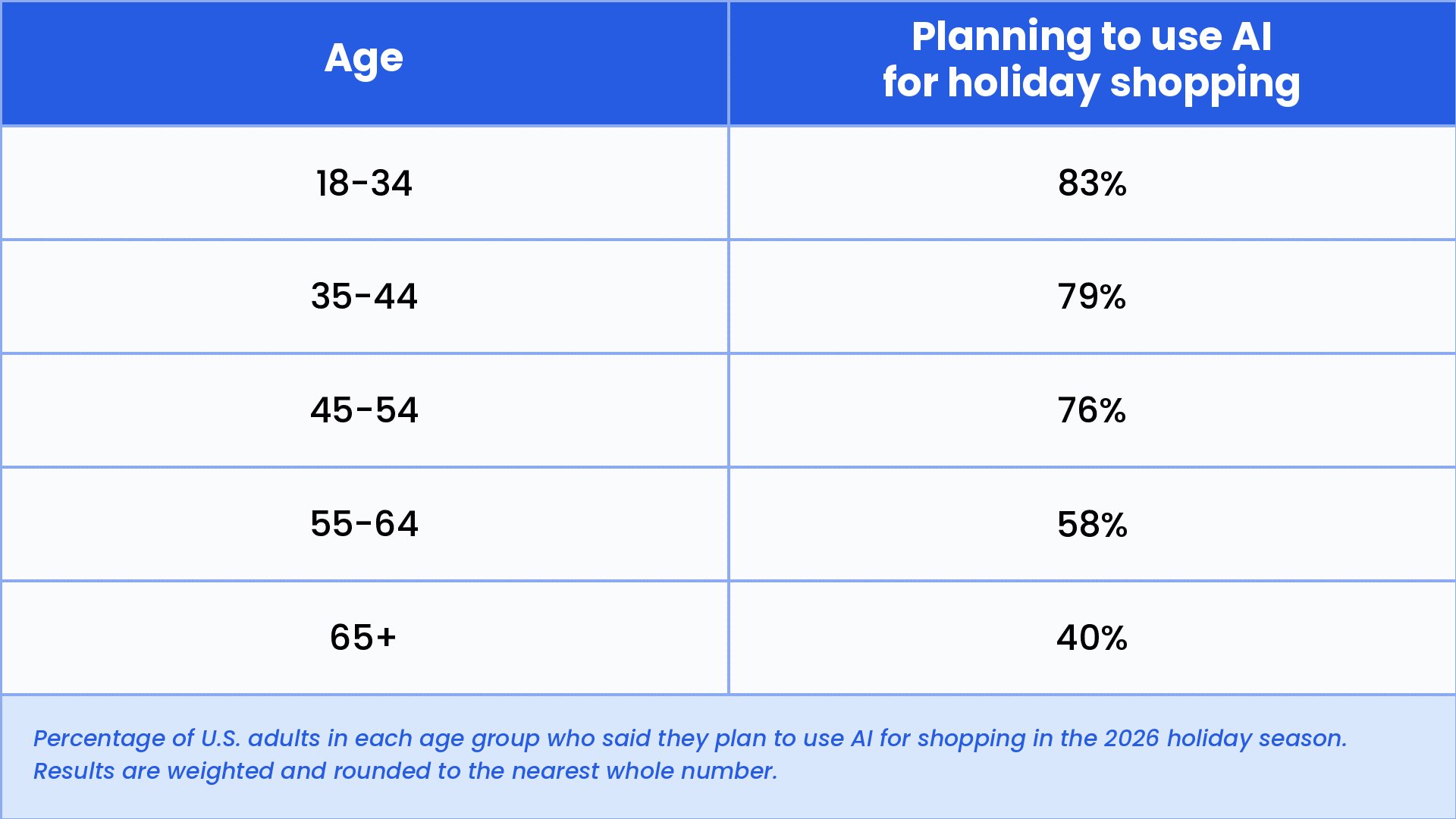
As those habits develop, retailers have an opportunity to turn new shopping behavior into lasting customer relationships. An AI recommendation may bring someone to your site for the first time, but whether they return will depend on how the purchase goes — and whether they feel comfortable trusting that process again.
For younger shoppers in particular, those early experiences could shape where they choose to shop for years to come. Recognizing and serving them through their agents this holiday season could be the beginning of a customer relationship that lasts well beyond the final gift being opened.
Join the Agentic Commerce Collective
AI is set to play a larger role in holiday shopping this year and beyond. The Agentic Commerce Collective helps merchants prepare for agentic commerce. Every month, commerce leaders come together to discuss what’s happening now and what’s coming next.
Survey Method
This survey was conducted online within the United States by The Harris Poll on behalf of Forter from September 15 – 16, 2026 among 2,017 adults ages 18 and older, among whom 1,927 plan to shop for holiday gifts. The sampling precision of Harris online polls is measured by using a Bayesian credible interval. For this study, the sample data is accurate to within +/- 2.7 percentage points using a 95% confidence level. For complete survey methodology, including weighting variables and subgroup sample sizes, please contact [email protected].
Published on October 20, 2026
•
3 minute read
•
Author: Forter Team
Source link