


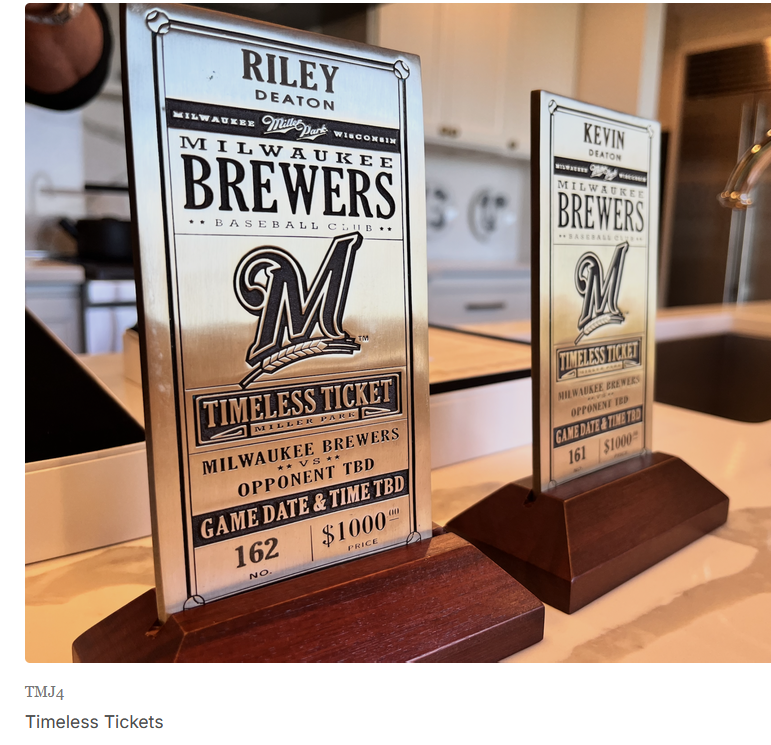
Imagine paying $1,000 for a ticket to a baseball game, waiting 11 years to use it, and then finding out that your supposedly special ticket might get you standing room only. That’s what some Milwaukee Brewers fans say is happening with the team’s Timeless Tickets.
It sounded like a great deal at the time. 1,000 Timeless Tickets were sold in 2015 by the Brewers for $1,000 each. Each ticket came with a simple promise: You can redeem your ticket for ANY future game, including the World Series. The tickets promised the “best available seat locations, subject to ticket availability at the time of redemption.”
And this is where things get dicey. What did the team mean by “best available”???? Kevin Deaton and Kyle Deaton each bought a ticket and saved it, hoping someday the Brewers would get into the World Series. This year, their dream is coming true. But when the brothers tried to redeem their Timeless Tickets, thinking they’d get sets in the lower level, close to the action, they were very disappointed. The Brewers offered them two options for seats: either terrace level (upper deck) or standing room only.
There were lots of better seats available, but the team did not make those available to the Timeless Ticket holders. Certain seats were assigned as “available” to them, but they weren’t the tickets in better areas of the stadium.
Since I’m a fraud investigator, the first question I asked is whether the Timeless Ticket holders are being defrauded. Businesses sometimes make promises that sound wonderful when they’re collecting money, only to interpret those promises very differently when it’s time to deliver. The customer remembers what was advertised. The business points to its interpretation of the fine print.
In this case, the language seems fairly straightforward. “Best available seat locations” sounds like the best seats available when you redeem the ticket. It doesn’t sound like the best seats from a limited selection that the team decides to set aside.
Of course, the phrase “subject to ticket availability” gives the Brewers some flexibility. But if better seats were available and the team simply chose not to offer them to these customers, that’s a different issue.
Is it fraud? Not necessarily. Fraud generally requires more than a disappointed customer or a disagreement over contract language. We’d need to know what the Brewers represented when selling the tickets, what restrictions were disclosed, and whether the team intended to honor those representations.
On the surface, the situation appears to be one of deceptive marketing. Customers were led to believe they could lock in a great seat to a future big game with a big up-front payment. If the Brewers never made it to the World Series, these ticket holders would probably never cash in their tickets and the ball club just keeps the money. That’s the deal, right?
But the unlikely has happened, and now it’s time for the Milwaukee Brewers to make good on a promise they made a decade ago. The team collected $1 million from ticket sales, has had this money for 11 years, and the team had an obligation to allow people to redeem these tickets in the spirit of the promise. If there were going to be important limitations on the redemption of the tickets, this should have been disclosed prior to the sale of the tickets.
Ask yourself this: If purchasers had been told that they were paying $1,000 for the possibility of getting an upper level or standing room only ticket, how many of them would have participated? I bet none of them would have done it.
I have no idea whether the Brewers legally owe these fans better seats. But I can understand why someone who paid $1,000 and waited 11 years would be upset about being offered standing room only. I don’t know how the Brewers can make this right for the fans. The seats for the games on Friday and Saturday are likely already spoken for. The team now has approximately 1,000 loyal fans who feel cheated out of the experience they were promised in 2015.
Source link